Category: News

  • The story of Joop – Diabetes

    The story of Joop – Diabetes

    Being free of diabetes. That was the goal of Joop Sirag (58) when he started his high altitude training in 2012. Today, the medication usage of this beekeeper in training has declined dramatically.

    Diabetes
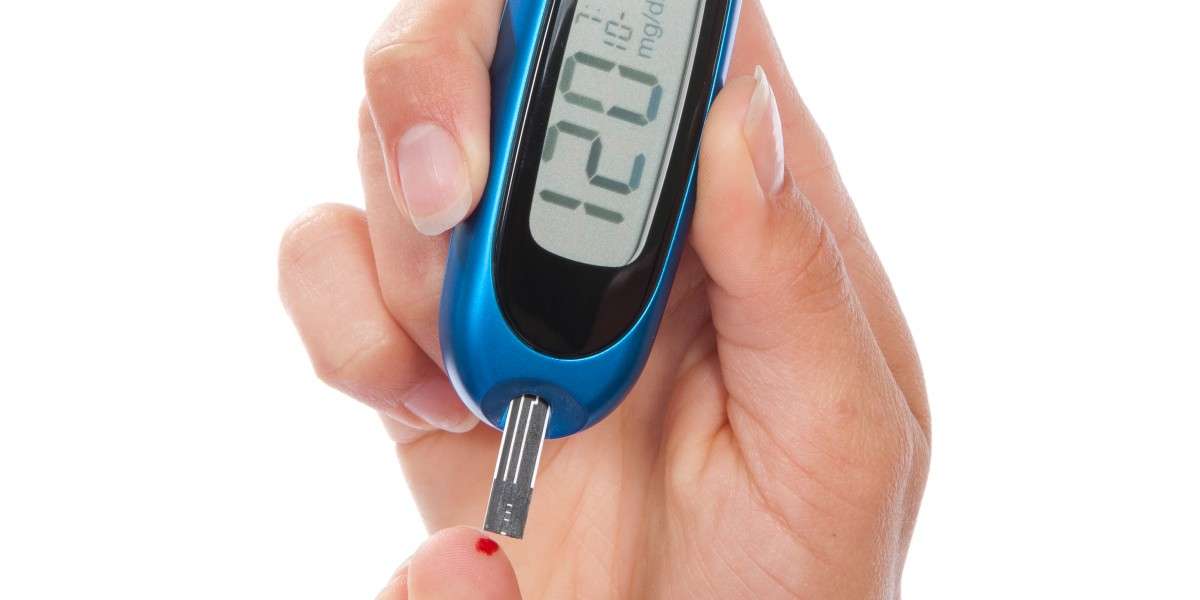
    Joop was diagnosed with diabetes type 2 in 2004. Once a day he gives himself a shot of insulin to prevent an increase of his blood sugar level. He knows very well how he got diabetes; ‘I’ve worked too much, ate too much and moved to little.’ These days, he’s a changed man and wholeheartedly trains three times a week. Does diabetes limit him in in daily life? ‘Not at the moment but if I want to decrease my sugar level even more I would have to give up drinking beer once in a while and that is not something I’m willing to give up.’

    High Altitude Training
    He found out about altitude training via a research set up by the Radboud Hospital in Nijmegen. During the research he exercised four times a week and his blood and condition were well monitored. At the moment he trains three times a week. How does he experience high altitude training? ‘I can notice that I take in less oxygen and that my body needs to work harder to balance it out. Every time I’ll break out in a sweat in no time.’ The results show that all his hard work definitely has effect. He went from insulin level 33 to 13 in less than a year. ‘My blood pressure also improved.’ This of course also resulted in weight loss; he went from 99 kilos to 84,3. 

    Motivation
    If you see that your values don’t drop, it’s sometimes hard to stay motivated. ‘That’s true but if I miss a day of training I feel guilty. That motivates me to go the next day anyway.’ Joop gets more motivation by training at the gym than when he does it at home. ‘I have a whole basement full of fitness equipment but I never use them.’ When we ask him how we can motivate other diabetics he’s very clear: ‘I believe it would help if training and exercising would influence the price we pay for our health insurance; if you regularly exercise, you would have to pay less. Everyone would benefit.’

    High Altitude Rooms   
    When we ask Joop if he is still missing something in the altitude rooms, he answers that he would love to be able to train on different types of equipment. At his gym they have a ROM, a machine that trains all your muscles in 2×4 minutes. ‘I would love to find out what the effects would be at altitude.’ Can he do without high altitude training? ‘Yes, but the results would take a longer time to show.’  
  • 4.000 meters high, at sea level!

    4.000 meters high, at sea level!

    How do you prepare yourself for an expedition to the highest mountain on the south pole?

    Adventurer Arnaud de Wilde (50), trains at an altitude of 4000 meters – in a gym in the Netherlands.

    It is impossible for Arnaud de Wilde to enter Healthclub Juliën in Lienden unnoticed. De Wilde wears his complete expedition outfit: hiking boots, a 95 liter backpack on his shoulders, ready to defy the south pole. But first, he walks the ten kilometers between his house and the gym. When he arrives at the gym,he enters a special high altitude training room, which by that time, is already prepared by the employees for it’s visit to Juliën.

    In the altitude room, oxygen levels are lowered.  Therefore, it feels as if you were standing on a mountain of 4.000 meters. De Wilde places his oximeter on his index finger and clicks a heartbeat sensor around his chest. Than he steps on the treadmill: during the upcoming three hours he will walk a steep hike, just like in the mountains.

    This is how Arnaud prepares for this unique expedition. Together with his Belgian climbing mate Wim De Bakker, he wants to climb the highest mountain on Antarctica. Mount Vinson is 4.892 meters high. Higher than the Mont Blanc, but especially an enormous climb considering the extreme cold of Antarctica and the constant polar winds. Mount Vinson feels like a seven-thousander, due to the low air pressure that close to the south pole. It is the most difficult mountain of the Seven Summits; the seven highest mountains of every continent.” 

    The altitude rooms are a key ingredient in Arnaud’s training program. “It is important to know how you react to the conditions in the mountains. For how long can you walk at an altitude of 4.000 meters? What happens with your heartbeat? How many kilometers can you walk on a steep hill? All of this can be tested in the altitude room. On top of that, high altitude training increases the amount of  red blood cells in Arnaud’s blood, which makes him more adaptable to thin mountain air.” 


    Arnaud is a striking user of high altitude training rooms at Healthclub Juliën. Most people that use high altitude rooms are people who try to lose eight. “Training in high altitude rooms increases the speed of burning calories.” Tells Edwin Willemsen, director of b-Cat, the company that develops the altitude rooms. 

    This technology has lots of different applications: Fire prevention, protection of cultural preservation and insect treatment in agriculture for protection of fruit and vegetables.

  • Preperations Olympic games Tokyo

    Preperations Olympic games Tokyo

    The Olympic Games in Tokyo are getting closer. During the Olympics, it will be summer there and then it is very hot. To be well prepared for the heat, athletes can train in our climate room.
    In the city of Tokyo, it is averaging 35 degrees in the summer. But that’s not all. The air is also extremely humid. This makes it harder to breathe properly and you suffer more from the heat than usual.
    Such circumstances are intense and it is therefore important to get used to it. By training in our climate room, athletes know better how they can handle the heat.
    Skateboard star Candy tested the climate room and she immediately noticed how heavy it is.